
Augustwolf / Visual Music
Visual Music.
An instrumental journey shaped by composition, collaboration, production and visual imagination.
01 The record
More than an album. A collaboration, and a story still being told.
An instrumental record gives up the easiest tool a musician has. There is no lyric to carry the meaning and no voice to point at the feeling and name it. Whatever a piece is about, the arrangement has to do it alone — which is why the reviews keep returning to the composing and the production rather than to any single performance.
- Artist
- Augustwolf
- By
- Douglas Wolf Reid & Oleh Andrievsky
- Released
- 2023
- Form
- Instrumental · cinematic
- Runtime
- to be confirmed
- Label
- to be confirmed
02 The story
The circumstances the reviewers kept returning to.
Obsidian Thoughts called it a high-quality work, created with love and imagination.
03 The tracks
The story behind the album
Pursuit
“A couple of minutes of mayhem.”
Oleh Andrievsky — electric guitar · Ukraine
Marco Toba — bass · Argentina
Doug Reid — everything else · USA
The Sorcerer’s Audition
“A skeptical king challenges a sorcerer to impress him.”
Oleh Andrievsky — guitars · Ukraine
Martin Steapien — bass · Poland
Glenn Welman — drums · South Africa / UK
Doug Reid — everything else · USA
Jimmy Jam
Dedicated to Doug’s friend Jim, who loved blues and R&B.
Oleh Andrievsky — electric guitar · Ukraine
Damiano — Hammond organ · Italy
Doug Reid — everything else · USA

Cirque Show
“Imagine this is music for a Cirque performance troupe.”
Oleh Andrievsky — electric guitar · Ukraine
Doug Reid — everything else · USA
On Douglas Pond
“Nothing like floating on peaceful water in the summer.”
Oleh Andrievsky — guitars · Ukraine
Doug Reid — everything else · USA
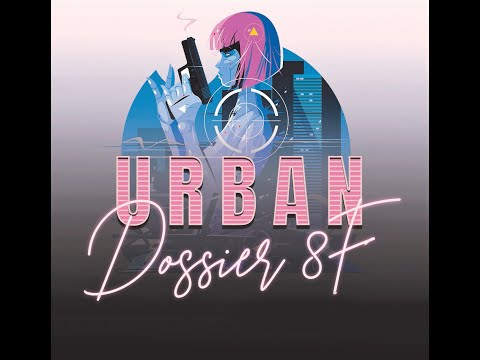
Urban Dossier 8F
“Spies, intrigue, cool funk.”
Oleh Andrievsky — guitars · Ukraine
Ivan Krnic — bass · Serbia
Damiano — Hammond organ · Italy
Doug Reid — everything else · USA
La La Chillax
“No place to go, no time to be there, going with the flow.”
Oleh Andrievsky — guitars · Ukraine
Manuel Trabbuco — saxes · Italy
Doug Reid — everything else · USA
Soften the Hammer
“Shades of the Old West and the hard work of so many.”
Oleh Andrievsky — guitars · Ukraine
Glenn Welman — drums · South Africa / UK
Ivan Krnic — bass · Serbia
Doug Reid — everything else · USA
Blockster
“Sixty seconds of Kaiju.”
Oleh Andrievsky — electric guitar · Ukraine
Doug Reid — everything else · USA
Here I Stand
Dedicated to Don, “who has taken on the world for love.”
Oleh Andrievsky — guitars · Ukraine
Glenn Welman — drums · South Africa / UK
Ivan Krnic — bass · Serbia
Irina Markevich — violin · Ukraine
Joylin — violin · Romania
Doug Reid — everything else · USA
Ukraine Peace and War
“It starts in peace until the invasion. Hopefully peace will return.”
Oleh Andrievsky — guitars · Ukraine
Doug Reid — everything else · USA
The musicians
Taken together, Visual Music involved musicians from nine national and geographic backgrounds.
| Musician | Instrument / Contribution | From |
|---|---|---|
| Doug Reid | Composition, guitars, keys, drums, bass, samples, production; “everything else” | USA |
| Oleh Andrievsky | Electric guitars / guitars | Ukraine |
| Marco Toba | Bass | Argentina |
| Martin Steapien | Bass | Poland |
| Ivan Krnic | Bass | Serbia |
| Glenn Welman | Drums | South Africa / UK |
| Damiano | Hammond organ | Italy |
| Manuel Trabbuco | Saxophones | Italy |
| Joylin | Violin | Romania |
| Irina Markevich | Violin | Ukraine |
04 The videos
Track listing (Youtube)
Sleeping Bag Studios reviewed this record track by track — the most detailed piece written about it. The listing below is the skeleton; the titles and timings go in as soon as they are to hand.
Track listing (Vimeo)
Sleeping Bag Studios reviewed this record track by track — the most detailed piece written about it. The listing below is the skeleton; the titles and timings go in as soon as they are to hand.
05 Free to take away
The written story, free.

06 In their words
What they heard
Nine publications on Visual Music, February to May 2023. Every one of them is linked in full.
The Static Dive
Called it a beautiful, powerful collection of cinematic instrumentals — shaped by international collaborators and the resolve it took to finish the record during wartime in Ukraine.
JamSphere
One of the most enthusiastic reviews of the album, praising the composing, arranging and production, along with Oleh Andrievsky’s guitar work, on a large cinematic scale.
SoundLooks
A dedicated release feature praising the album’s musicianship, composition and production, indexed under Douglas Wolf Reid’s own coverage on the site.
Crooked Forest
Obsidian Thoughts
Stereo Stickman
Tunepical
Highlighted the collaboration between Douglas Reid and Oleh Andrievsky, praising the album’s cinematic character, versatility and musicianship.
Daily Music Spin
Says the music is experienced as much as heard, praising its emotional impact without lyrics and its handling of transitions between tracks.
Sleeping Bag Studios
The most detailed review found, moving track by track — praising the professionalism, melodic sincerity and international musicianship of the record.